
Kubang Badak BioGeoTrail
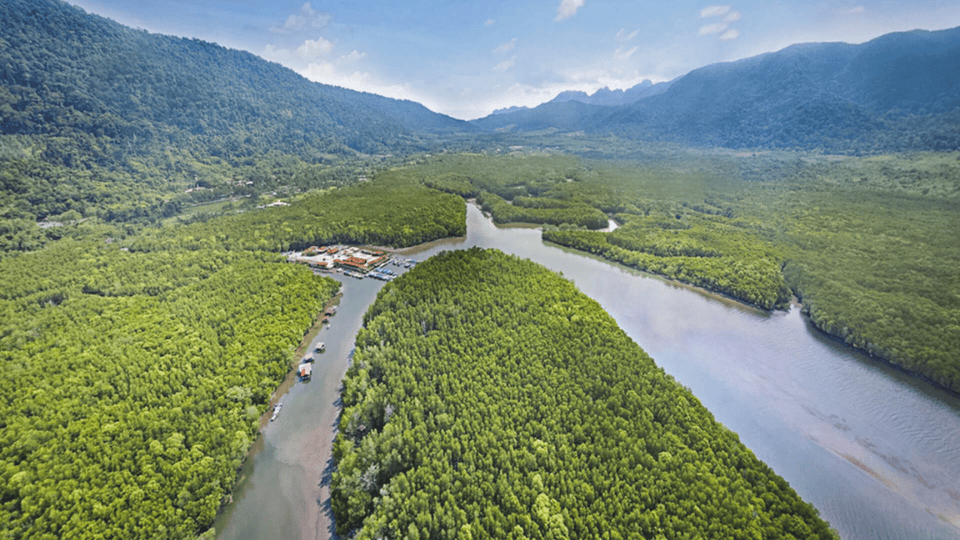
Framed by vast greenery and tranquil waters, Kubang Badak is a living tapestry of Langkawi’s natural and cultural heritage. In the spirit of World Tourism Day’s theme, “Tourism for Inclusive Growth”, this small village exemplifies how community-led tourism can protect heritage while creating opportunities for local livelihoods.
Located within the Langkawi UNESCO Global Geopark — Southeast Asia’s first — the Kubang Badak BioGeoTrail earned international recognition with a PATA Gold Awards (Heritage Category) in 2021. The trail weaves together biodiversity, geology, and living traditions, drawing strength from the very resources that have sustained the village for generations.
A Landscape Shaped by Nature & Story
Kubang Badak’s ecosystem spans mangrove forests, a geologically diverse river estuary, and a settlement rich in history. Local lore traces the village’s name to a “badak” — a rhinoceros-like guardian believed to have protected the community.
Historically, the village’s roots reach back to 18th-century Thai settlements, reflected today in shared language fluency, arts, and traditions — a result of Langkawi’s close proximity to Thailand. While marine resources remain vital, tourism now complements traditional livelihoods, ensuring benefits are shared locally.
Visitors can book guided boat cruises that connect a series of remarkable sites, each revealing a different chapter of Langkawi’s deep past.
Highlights Along the BioGeoTrail
Bukit Menora
A striking mogote — a steep, isolated limestone hill — Bukit Menora rises at Sungai Siam. Once a communal hub for early Thai settlers, its name comes from Menora, a traditional dance-drama. Related forms such as Mak Yong and Mek Mulung are still performed in northern and eastern Peninsular Malaysia today.
Kampung Siam
Traces of early industry remain in the form of century-old charcoal kilns, remnants of a once-thriving trade. Charcoal production ceased in the late 1980s following the introduction of coal and natural gas, while forestry protections now preserve these historic structures.
Gua Pinang Geosite
An ancient sea cave formed approximately 6,000 years ago, when sea levels were about 15 metres higher than today. Oyster and cockle shells embedded in the cave walls testify to former shorelines. Cave fauna here display classic adaptations such as reduced vision, loss of pigmentation, and slower metabolism.
Pulau Jemuruk (Cambrian Fossil Geosite)
Home to some of Langkawi’s oldest rocks, Pulau Jemuruk exposes the upper layers of the Machinchang Formation — linked to Mount Machinchang, among Southeast Asia’s oldest mountains. Beyond fossils, the island remains a traditional foraging site for snails and oysters.
Tanjung Buta
A geological treasure trove featuring abrasion platforms, sea caves, and pocket beaches. The standout discovery here is a trilobite fossil estimated to be over 500 million years old (Family Saukiidea), a key marker within the Machinchang Formation.
Plan Your Visit
To book a guided tour, please contact:
Mr Sabri — +60 12 573 6453
Photos and information courtesy of Kubang Badak BioGeoTrail. Learn more via Langkawi UNESCO Global Geopark on Facebook or Naturally Langkawi on YouTube.